discourse

Part 5: Getting to Know You

The other night was quite windy in here Santa Monica. It was 4am and I was wide awake and totally spooked.  I randomly posted how I was feeling to Twitter and noticed shortly thereafter that other west-siders were awake and acknowledging that they felt the same way.

This exchange comforted me somehow. It made me feel less neurotic about being freaked out by something so simple as wind.

It’s scary to think that everything I post is on record somewhere, but to participate I realize – like in a real world relationship – that it helps to open up.

I noticed that after posting more opinionated tweets or describing certain situations that my number of followers dramatically increased.  Offering up stuff I was working on, like  DJ mixes, helped too.

Make the experience personal and memorable and people will follow.

Just like the real world, the Twitterverse is full of amazing individuals who love to share their creations, thoughts and opinions.

Get to know your tweeples. Send them messages, read their blogs. You’ll become flattered by the types of people who follow you, and become inspired to offer more.  It makes participation more meaningful than communicating aimlessly in an anonymous online world.

  • Share/Bookmark

Part 4: We’re the Best of Friends

bff

A few weeks ago I had an interesting conversation amongst friends in the dark corner of a Chinatown Bar.

Of all things one could discuss on a Saturday night at 1a.m. we got to chatting about, well, chatting. Specifically, on voicemail, e-mail, IM, SMS, FB and Twitter.

Leave it to the nerds.

As biggest nerd ever, I thought more about this over the course of the next few days.

While the aforementioned mediums make it easier to communicate, while we participate we’re sacrificing the human experience and encouraging alienation from others.

My friends know that I generally dislike voicemail. It’s rare that I leave them and admittedly barely listen to them.

They’re like an awkwardly scripted one-way time capsule from the past. Why not leave the same message in real time – circa now?

In 1995 I signed up for my first email address. In the interest of self-disclosure for the sake of this story I (gulp) became semi-addicted to AOL chat rooms.

This was back in the day when we were all on dial-up – and paid for internet by the hour.

Like most people, I was beyond intrigued with the notion of chatting in real time with anyone from anywhere in the world. For a angst-ridden teenage girl growing up in the midwestern suburbs it was my portal.

Ironically enough, I quickly became friends with someone who happened to live nearby. We immediately bonded over our mutual obsession of music, media, the arts, and local underground parties (ok fine, “raves”).

There were no rules. We’d chat anytime of day or night when both of us happened to be online. There was no limit to the range of topics we’d discuss.

Over time, our lives became closer and he felt like a real friend.

One year we briefly met in person by total accident. We chatted for a few awkward moments until my friend pulled me away. “Who is that guy?” She asked.

She didn’t even have an e-mail address at that point so maybe she wouldn’t understand…or would she?  I tried to explain.

“Ok, anyway…”, she replied. “Wanna get some frozen yogurt?”

When I moved away to college our friendship continued.

He’d give me feedback on various art projects and tips for acclimating  to a newly vegan diet. I’d give him girl advice and let him know what I thought of his latest remix. We’d crack jokes, share URLs and pontificate the meaning of life years later as I procrastinated writing those 30 page papers in grad school.

He moved to Los Angeles, I moved to Boston.

We became friends on MySpace, then Friendster, then Facebook.

I moved to Los Angeles.

We slowly became friends In Real Life. Bonded by our mutual common interests, I’ve found myself on more than one occasion chatting with him poolside at the Roosevelt Hotel or under the skylights at LA hotspot Bardot.

My male companions give him the hairy eye wondering who the dude is I’m chatting conspiratorially alongside.

15 years later, we still communicate on IM. Now, we also communicate via SMS and e-mail too.

And sometimes, we’ll even drop the other a Voicemail.

Are our lives intertwined? Somewhat.

Will we ever connect on a deep and meaningful level? Probably not.

As part of different spheres, our interests overlap on a social level only.

Yet for someone I’ve hung out with for maybe an hour total in person, he probably knows more about me than anyone.

Communicating on IM can build a form of friendship. We’re missing the part that hanging in person brings – the adventures, atmosphere, lingering conversations, observations, body language. These things bring meaning to a surface-level friendship and make it come alive.

Can a real friendship be fostered online then, when all we have is type?

Leave your comments by clicking on “comments” at the top of this post.

  • Share/Bookmark

Part 3: A Snapshot in Time (the past is inescapable)

feeling anonymous

The city’s asleep and I’m aimlessly noodling around the bungalow. I’m tired. I need sleep but my mind is reeling. I’m feeling placeless, lost in space and time.

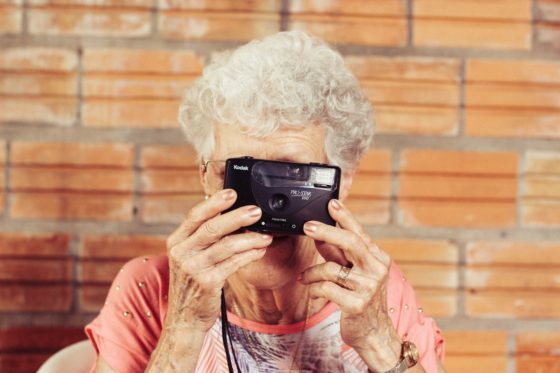
I notice a few dusty photo albums on the shelf that haven’t been opened since before they were unpacked nearly a year and a half ago. I pull them down and begin perusing the contents of mostly old photos from senior year of college.

Real celluloid photos – remember those?

Hmm, most were taken at social events and all prominently acknowledge the subject matter. It’s almost as if we were hyperaware of presenting ourselves within a certain context for those who would see that photo in the future.

Me with my little outfit and makeup on. Posing just “so”.

Say “cheeese”!

Who was I then? There are so many memories buried deep in the back of my brain of the best laughs and the biggest heartbreaks. It’s like those memories don’t even exist now. Where does all that stuff live? Where is that reality? Did it all go away?

Certainly not within the context of these photos.

Maybe a picture isn’t worth a thousand words.

Online, we document more. We can create a daily stream of data detailing where we are, what we’re into, how we’re feeling – and this stuff lives on over time. Contextually, it can be considered to be deeper documentation, like a diary of sorts.

The big question is, Is this the Truth?

A different so-called snapshot of ourselves that is real and for the world to acknowledge.

Or is it a forgery too?

Sometimes one of the most difficult things about growing into who one is meant to be as a person is not letting go or forgetting the past but remembering it and embracing it for what it was.

When old friends, classmates, and even neighbors first surfaced on Facebook I was somewhat remiss in acknowledging the possibility that these relationships might be rekindled, or shared experiences relived.

Sometimes I think about that when I’m leaving a status update. Who’s going to see this? How will they think of me?

We can vet our online presence to our little heart’s content, but at the end of the day, it is a snapshot of you.

Now.

However you choose to take it.

  • Share/Bookmark

What Facebook taught me about learning to say NO

I could be a better decision maker. There, I’ve said it. Not that I’m totally indecisive or stubborn, but sometimes I just have a hard time prioritizing. I’m the type who used to say yes to almost anything – I blame the Second City improv training that taught us the concept of “yes…and”.
If you asked me to see a band play, I’d say yes even if I secretly thought the band was crap. If you asked me to meet you for an after work drink, I’d say yes then later realize it’s logistically impossible to do so. Triple booking on a Thursday night left it impossible to attend all events in question.
I had earned a bit of a reputation of what my mom likes to call a “flibbergibbit”. Maybe it’s a fear of commitment – I’m not sure, but I’ve gotten much better.
Facebook makes me face these issues head-on to a degree. Are you actually attending this event? Are you friends with this person? Simply put: Yes, or NO?
And of course there’s a loophole for events: the option of saying …”maybe”. What do all of those maybes mean anyway? Do we really mean “I’ll think about it and actually consider attending your event?” or are we just being polite?
My friend Jeff sees it all on my FB feed. “Are you really going to all of these events?” He asks. I told him the truth – mostly, I will. Mostly.
Friend requests are easier. Either I know you, or I don’t. Velvet rope. Easy.  Done. Decision made.
At first it was hard to kibosh friend requests – aw this person wants to be my FRIEND! How sweet. I learned fast as the friendship almost immediately turns irritating when my news feed becomes cluttered with random musings from a total stranger.
Groups are an easy one because most of the time you’ll never hear from them again. Pages are trickier because they’ll also show up in your feed and do I really want everyone to know that I’m secretly a fan of Weinerschnitzel?  (speaking hypothetically here. The truism for me would be more like, hypo-allergenic vegan non-soy based vegetable protein).
MySpace was a mad race to connect to everything and everyone. With that lesson learned, FB has taught us to be more selective. This forces us to make decisions about who and what we want to include in our (online) life – or more importantly, let everyone know we care about.I’m the type who used to say yes to almost anything – I blame the Second City improv training that taught us the concept of “yes…and”.

I used to be the type who was agreeable to attending almost anything – I blame the Second City improv training that brought us the concept of “yes…and”.

If you asked me to see a band play, I’d say yes even if I secretly thought the band was crap. If you asked me to meet you for an after work drink, I’d say yes then later realize it’s logistically impossible to do so.

Triple booking on a Thursday night left it impossible to attend all events in question.

I had earned a bit of a reputation of what my mom likes to call a “flibbergibbit”. Maybe it’s a fear of commitment – I’m not sure, but I’ve gotten much better.

Facebook makes me face these issues head-on to a degree. Are you actually attending this event? Are you friends with this person?

Simply put: Yes, or NO?

And of course there’s a loophole for events: the option of saying …”maybe”. What do all of those maybes mean anyway?

Do we really mean “I’ll think about it and actually consider attending your event?” or are we just being polite?

My friend Jeff sees it all on my FB feed. “Are you really going to all of these events?” He asks. I told him the truth – mostly, I will.

Mostly.

Friend requests are easier. Either I know you, or I don’t.

Velvet rope. Easy. Decision made.

At first it was hard to kibosh friend requests – aw, this person wants to be my FRIEND! How sweet.

I learned fast when the new friendship almost immediately turns sour, when my news feed quickly becomes cluttered with random musings from a total stranger.

Groups are an easy one to moderate because once you join, you can control how often you’d like to hear from the group.

Pages are trickier because they’ll also show up in your feed and do I really want everyone to know that I’m secretly a fan of Wienerschnitzel?  (speaking hypothetically here. The truism for me would be more like, hypo-allergenic vegan non-soy based vegetable protein).

MySpace was a mad race to connect to everything and everyone. With that lesson learned, FB has taught us to be more selective. This forces us to make decisions about who and what we want to include in our (online) life – and how that can apply to decisions we make every day.

  • Share/Bookmark

Media for Everyone

social_media_clutter

Some say the decentralized nature of online communities creates an environment conducive to so-called socialist behavior. I wouldn’t say these tenets are examples of a new socialism* by any means. I think the medium contains too many overarching constituents to take into consideration before assigning it any sociological value.

Given my own experience with online communities I’d lean towards more of a populist approach* – and I also wonder:

Are there any underlying marxist elements at play when we think about how content is consumed?

Rapid technological advancement leads to costly hardware from iPhones, to gaming consoles, to media storage. On top of that, monthly bandwidth and data plans are required to make those things work.

Comcast employs a tier-based system of pricing models for various downstream and upstream bitrates. It’s recommended to have at least have a 1.5MB pull to watch video, a step or two above the most basic monthly package.

This ultimately leads to a pyramid of who can afford what. Are we leaving out those who have limited to no accessibility?

If so, how large will the rift be between the informed and uninformed?

In the print editon of July’s Wired, President Obama’s newly appointed CIO Vivek Kundra references online communities as the new public square where people will discuss government info soon to be released online.

He says that “...by democratizing data, the American people will be able to hold their government accountable, based on evidence rather than talk.”

This is great and the internet does act as a public forum – but only for those who know how to use it.  Will this create an elitist class of those who have means to access this information?

We live and work more efficiently than we did  5 years ago. We have the ability to get more done while constantly staying connected to each other and the rest of the world. In this seemingly decentralized and transparent public sphere we can stream documentaries for free under public domain, read about issues that affect us at the local and global level and then participate. We can even download a free weekly video update from our President.

Information we choose to receive is free and widely distributed. However hi-bandwidth is required to download podcasts, stream video, and move quickly from window to window. We need speedy hard drives and vast amounts of storage space with software that frequently needs to be updated. Not to mention the occasional tech support.

Will those who don’t have these things be left in the dark?

In an emergency, would people with the pricey smart phone have an advantage in avoiding a crisis situation?

If I were part of a Union and there’s activity happening online whereby I can participate in issues that matter to me, firstly I would want to know where to find about it. Secondly, I’d be inclined to participate.

Who are the technological evangelists empowering people of all classes to leverage the internet to their benefit?

The Media Access Project (MAP), Public Knowledge groups are just two of the public interest groups fighting for issues like the expansion of broadband, open access and net neutrality. The Center for Social Media encourages the promotion of a dynamic and engaged public through social media. There are many similar organizations out there (see links to a few below).

Maybe before taking on the herculean task of making government documents public, we should take additional steps to set up programs for public access and consumption.

Content-holders should be encouraged to offer lower bitrated streams of their media. Cities should create a rock-solid plan for municipal wi-fi. Community colleges can offer free classes showing people how to navigate RSS feeds and publish online. We need to leverage new media to somehow to become a voice for all, rather than a privileged novelty for some.

More:

http://www.mediaaccess.org

http://www.centerforsocialmedia.org

http://www.publicknowledge.org

http://freeculture.org

http://www.media-democracy.net

http://www.democraticmedia.org

http://www.freepress.net

http://www.wired.com/culture/culturereviews/magazine/17-06/nep_newsocialism

http://www.wired.com/politics/onlinerights/magazine/17-07/mf_cio

http://en.wikipedia.org/wiki/Vivek_Kundra

*-

http://www.nicolecifani.com/2008/11/twitter-facebook-and-fox-news-oh-my-or-how-i-was-seduced-by-the-internet-on-election-night/

http://www.nicolecifani.com/2008/10/hacking-the-debate/

Trackback for Facebook readers: http://www.nicolecifani.com/2009/08/media-for-everyone

The Media Access Project (MAP) and Public Knowledge group are just two of the public interest groups fighting for issues like the expansion of broadband, open access and net neutrality. The Center for Social Media encourages the promotion of a dynamic and engaged public through social media. There are many similar organizations out there (see links below).
Maybe before taking on the herculean task of making government documents public, we should take additional steps to set up programs for public access.
Content-holders should be encouraged to offer lower bitrated streams of their media. Cities should create a rock-solid plan for municipal wi-fi. Community colleges can offer free classes showing people how to navigate RSS feeds and publish online. We need to leverage new media to somehow to become a voice for all, rather than a privileged novelty for some.
More:
http://www.mediaaccess.org/
http://www.centerforsocialmedia.org
http://www.publicknowledge.org/
http://freeculture.org/
http://www.media-democracy.net/
http://www.democraticmedia.org/
http://www.freepress.net/
http://www.wired.com/culture/culturereviews/magazine/17-06/nep_newsocialism
http://www.wired.com/politics/onlinerights/magazine/17-07/mf_cio
http://en.wikipedia.org/wiki/Vivek_Kundra
*-
http://www.nicolecifani.com/2008/11/twitter-facebook-and-fox-news-oh-my-or-how-i-was-seduced-by-the-internet-on-election-night/
http://www.nicolecifani.com/2008/10/hacking-the-debate/
  • Share/Bookmark

Part 2: Finding Love in the Social Cloud

intimacy-online-relationships

My girlfriend Leila is seeing two guys. The first has zero presence online. No profile on a company website, no Facebook page, no Flickr feed of his latest holiday or comments he’s left on blogs dissecting political stance. He’s a young attorney and “doesn’t have the time”.  In fact, according to Leila he’s even elusive on e-mail. She can’t find any information on him at all (c’mon, you know you Google your prospective dates too!).
They primarily communicate by speaking over the phone a couple of times a week (yes he does have a RAZR) and they see each other once, sometimes twice weekly.
The second guy she’s dating is totally plugged in. He’s on Twitter, Facebook, LinkedIn, Myspace, Vimeo, Digg, you name it.
They communicate several times a day via iChat, SMS/MMS text, and e-mail. Thanks to Twitter she always knows what he’s up to. Is he seeing anyone else? Who needs a magic 8 ball – ask Twitter!
Interestingly enough, although she communicates much less with guy #1 she feels closer to him.
While communication with guy #2 is consistently frequent it feels superficial to her because she doesn’t have his undivided attention. Oh, and it doesn’t help that she rarely sees him in person.
Guy #1, while she sees him on a regular basis, has more to talk about IRL (in real life). She also has no pre-conceived thoughts about him that she’s garnered from digging up dirt online; no assumptions as to who he may be as a person. She’s gotta find this all out on her own.
If we communicate more frequently with someone thru different mediums does it necessarily promote a healthy relationship?  it doesn’t appear that we’re getting to know a person on a truly deeper level, maybe even at all. With so many of life’s distractions online and in real life, is communicating with anyone on a meaningful level even possible? Have we become all “action” and no “talk”?
A relationship of any kind is meant to be rewarding. Each party wants validation from the other. In a narcissistic world where most online profiles are carefully self-groomed for vanity, the concept of nurturing any kind of relationship becomes a hall of mirrors where each friend appears just like the next.
Maybe the relationships of the future will revert to old-school techniques and mannerisms – like sitting down in person and having a conversation. Even then the smoke and mirrors ambiance of a dimly lit restaurant, music, and people-watching exist. Perhaps just having the opportunity alone to get to know someone – who they really are, not just online and via mass-emails – is what creates meaningful relationships in the 21st century.

My friend Leila is seeing two guys. I say, good for her! It’s interesting because she communicates with each of them in two totally different ways.

The first has absolutely zero presence online. No profile on a company website, no Facebook page, no Flickr feed of his latest holiday or comments left on blogs for her to dissect. He’s a young attorney and “doesn’t have the time”.  In fact, according to Leila he’s even elusive on e-mail. Basically she can’t find any dish on him at all (c’mon, you know you Google your dates too!).

They primarily communicate by speaking over the phone a couple of times a week (yes he does have a RAZR) and they see each other a couple of times weekly.

The second guy she’s dating is totally plugged in. He’s on Twitter, Facebook, LinkedIn, Myspace, Vimeo, Digg, you name it.

They communicate several times a day via iChat, SMS/MMS text, and e-mail. They’re “friends” on Facebook. And, thanks to Twitter she always knows what he’s up to. Is he seeing anyone else? Who needs a magic 8 ball – ask Twitter!

Interestingly enough, although she communicates much less with guy #1 she feels closer to him.

While communication with guy #2 is consistently frequent it feels superficial because she doesn’t have his undivided attention. Oh, and it doesn’t help that she rarely sees him in person.

Guy #1, while she sees him on a regular basis, has more to talk about with IRL (In Real Life…hah). She also has no pre-conceived thoughts about him that she’s garnered herself from digging up dirt online; no assumptions as to who he may be as a person. She’s gotta find this all out on her own.

If we communicate more frequently with someone thru different mediums does it necessarily promote a healthy relationship?  it doesn’t appear that we’re getting to know a person on a truly deeper level, maybe even at all. With so many of life’s distractions online and in real life, is communicating with anyone on a meaningful level even possible? Have we become all “action” and no “talk”?

A relationship of any kind is meant to be rewarding. Each party wants validation from the other. In a narcissistic world where most online profiles are carefully self-groomed for vanity, the concept of nurturing any kind of relationship becomes a hall of mirrors where each friend appears just like the next.

Maybe the relationships of the future will revert to old-school techniques and mannerisms – like sitting down in person and having a conversation. Even then the smoke and mirrors ambiance of a dimly lit restaurant, music, and people-watching exist. Perhaps just having the opportunity alone to get to know someone – who they really are, not just online and via mass-emails – is what creates a meaningful relationship.

What do you think? Leave your thoughts by clicking on the comments field at the top of this post.

  • Share/Bookmark

Part 1: What Does it All Mean, Anyway?

picture-3

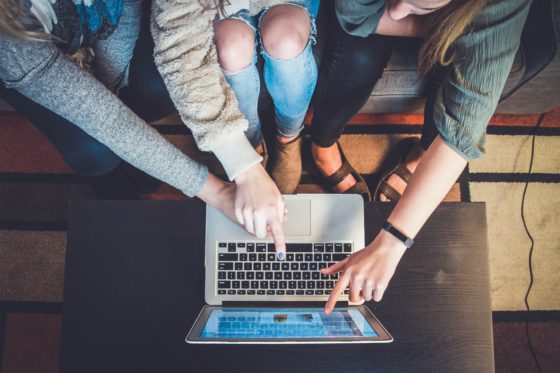
On the homepage of a typical social network like MySpace or Facebook, I can see as-they-happen updates from a vetted group of friends, networks, groups and organizations. The answer to the open-ended question “What’s on Your Mind?” gives way to a cacophony of information equivalent to a bunch of people shouting into space. Twitter, perhaps the most extreme exercise in brevity, allows for detailed minutiae of one’s inner monologue in 140 characters or less.

A new form of communication has been born: a medium that allows top-of-mind banter to be shared with whoever has the will to read it. Lifestreaming. Thoughts, images, links and video of the very innate variety can be posted for the world to see. There’s no excuse for someone with access to an Internet connection to not have the opportunity to be heard.

Is this the new public forum – a place to openly hash the public sphere and allow for interpersonal discourse at the local and international level? Or is it passive and mundane chatter amongst so-called “friends”? Because these sites vary by locality – decentralized as Twitter, Tumblr, Friendfeed or Facebook – it’s hard to say. Each island has it’s own population and the inhabitants are speaking a dialect to everyone, yet no one at all.

Why are we so eager to participate in a phenomenon without a distinct cause or purpose driving the madness? Maybe in part because most of these services are free, but what’s the real motivation?

Not too far in the distant past, privacy on the web was a hot button issue. We were hesitant to use real names in email addresses, give clues to things like real age, location, race, and gender, let alone details of political views or religious beliefs.

Despite the fear of releasing personal identity, the willingness to openly communicate with others remained clear. Chat rooms, message boards, emails…all lit up immediately with a new way of reaching out to the rest of the world.

Today, the thought of strangers openly chatting in online chat rooms seems dull. Gone are the days of emailing total strangers or using handles to appear anonymous or intriguing. We now strictly communicate in methods we have absolute control over with those we know – or audiences we feel comfortable sharing with.

We allow constructed personalities and messages to become on display in a one-way feed by communicating specific bits of information to these enabled groups or communities. We’re keen to openly divulge personal information – because we’ve come to realize that we have total control over what is being revealed.

This evolved way of communicating creates a one-sided conundrum whereby we are ultimately talking to ourselves.

We’re sharing information as a way to connect with others to fulfill individual needs of the ego. The reflection of who we present online is a reflection of the ideal self. We are not creating outlets for self-expression or meaning, but rather building upon an artificial construct of self consisting of imagery, text, number of friends – a pastiched cultural relevance that the ideal me would find significant to present to others.

We are an amphitheatre full of egos all shouting for recognition and importance – if only from ourselves.

Later in the series, I’ll take a look at how this affects the concept of the public forum by taking into account issues at the local, national, and international level.

More:

Twouble with Twitter:

  • Share/Bookmark

An Intro

communicate

Facebook and Twitter allow me to tell you what I’m doing, where I’m going, and how I’m feeling from almost any place at any time.

And anyone can see.

Brands aside, how does this new form of communication affect our relationships with others? It appears that we may be more connected yet becoming increasingly distanced from each other.

And by the way, who exactly are we talking to?

Is this an example of how we can use the internet to improve public discourse – or is it all banal chatter?

I’m beginning a series of long-form essays to explore answers to some of these questions. More to come.

  • Share/Bookmark

The Daily Beast

A new discovery this week is The Daily Beast, a news site that curates – not aggregates – popular stories in the press. The Daily Beast is the brainchild of author, columnist and magazine editor Tina Brown. Although the content itself has a tendency to err on the tabloid side, it’s great to be able to quickly scan headlines and pick out snack-sized bits of multimedia content to peruse.

Check it: http://www.thedailybeast.com

  • Share/Bookmark